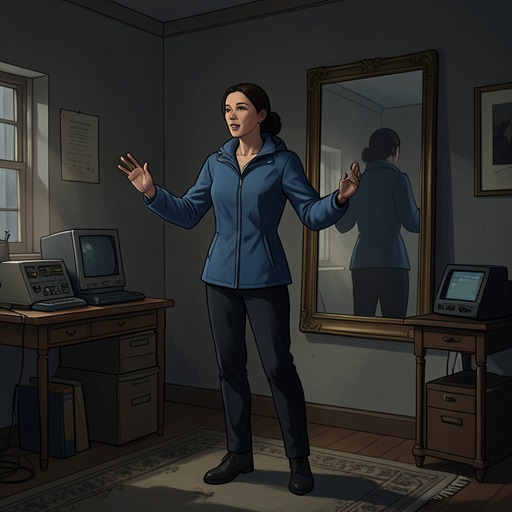
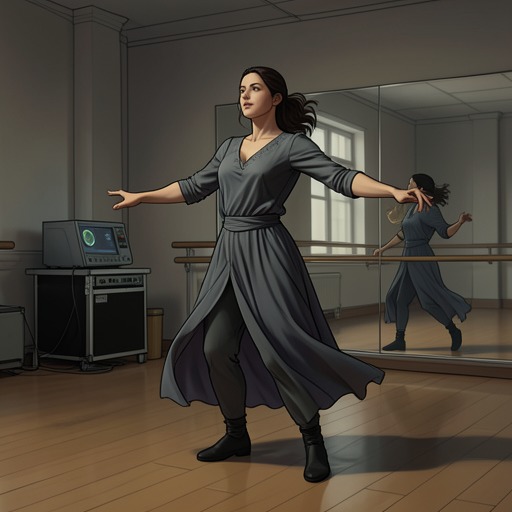
Ever’s conflict between medicine and dance
Loveboat, TaipeiEver’s conflict between medicine and dance is not simply a choice between two careers: it is a contest between a future her parents have prepared for her and the physical, creative life she cannot stop wanting. The medical path promises stability and respect for a family that has sacrificed for her; dance offers a way of living that feels like her own. As Ever’s plans repeatedly collide with parental expectations, financial limits, and inherited responsibility, she discovers that calling dance a farewell does not make it one.
Origins of the Conflict
Ever applies to Tisch secretly and almost on a whim, while her parents accept her dancing only because her guidance counselor has described it as useful for college applications. Medical-program applications fill the larger part of her plans. When a wait-list letter arrives, she assumes it is a polite rejection; the possibility that dance might become more than an extracurricular interest remains so fragile that she has not told her family.
The secrecy protects an ambition she knows her parents do not share, but it also puts her in direct conflict with the future they have organized. Ever says that medical school has been her path since before she could walk. Her parents have already paid the deposit, and she expects them to regard the time she spends dancing as something she should abandon after high school, when she enters the “real world.” Even her participation in a parade is kept at a distance from them: she has downplayed it so they will not restrict the time she spends rehearsing or object to her outfit.
Family Duty and the Price of Security
For Ever, the medical career represents more than personal success. Her mother recalls that Ever’s father pushed an orderly cart because the state licensure board would not honor his medical degree from China without a residency he could not afford while supporting a wife and baby. His lost professional path makes the family’s pressure on Ever legible as a consequence of economic and institutional barriers, not merely a preference for prestige. Her mother argues that he accepted work beneath his training to put food on the table and that the world crushes dreams.
Ever understands the sacrifice and feels its weight as a debt. She sees herself as the elder child who must earn back the cost of two lives, and she believes her parents would give up their own lives for her happiness. That love sharpens rather than dissolves the conflict: in Ever’s understanding, her future belongs to her parents as well as to herself. A Mother’s Day guilt, when gratitude does not come easily enough, becomes part of the same emotional bind. Choosing dance can feel not only like refusing a career but like refusing the security and respect her family struggled to provide.
Dance as a Possible Future
When Ever rehearses with Megan, she feels the prospect of a life in dance as a bodily alternative to hospital corridors. After a demanding run-through, she lies in the grass with stinging blisters from hours working with a fiberglass pole, yet the strain accompanies a rush of exhilaration. The question of whether this could be her future arises from that contrast: dancing feels physically alive, while the imagined medical environment is antiseptic and distant. Megan jokes that, once their number is ready for Public Square, Broadway will come looking for them. Ever knows the prospect is playful, but the image of Broadway still makes the dream briefly tangible.
Her dancing is not confined to one discipline. Twelve years of ballet training at the barre gave Ever a foundation and helped her reach Tisch, but she has also explored flag corps and jazz with the dance squad. Looking up studios in Taipei, she finds ballet, jazz, modern, and Chinese dance, and thinks she would join all of them if she could. She loves learning different styles rather than treating ballet as the only legitimate form. Yet the studios she finds are beyond her price range, and she cannot ask her parents to pay when they would tell her to concentrate on Chien Tan. She considers a smaller studio like Zeigler’s, perhaps one too small to have a website, and frames the search as a last hurrah and a farewell to dancing.
Pursuing Dance in Taiwan
That farewell proves difficult to keep. When an opportunity arises to audition for a role whose choreography she has studied obsessively, Ever is willing to travel from Sophie’s aunt’s house by Metro and even to improvise to show what she can do. The performance is scheduled for the second weekend of August, during Chien Tan’s Tour Down South, described as the summer’s highlight. Ever sees the clash clearly and decides she will find a way out of the trip: dancing matters enough that she accepts an eight-a.m. audition slot and clutches the dance-shop card she is given.
Her decision is still shadowed by the language of endings. Ever calls the performance her last dance, but the care with which she studies the choreography, plans the journey, and anticipates improvising shows how much energy she continues to invest in the art. The apparent contradiction is central to the conflict: she tries to relinquish dance in words while making concrete plans to pursue it. Financial limits and family expectations constrict what she can do, but they do not extinguish her desire to keep learning and performing.
Inherited Expectations and the Wider Stakes
Ever’s dilemma is illuminated by the different pressures surrounding the people close to her. Rick describes relatives urging him to leave Jenna and find the “right” girl; his mother fasted for three days in an effort to make him end the relationship. In another family, Sophie’s uncle expects her to earn her MRS at Dartmouth, while Sophie’s own fear of becoming poor and discarded is rooted in watching her mother move from hotel work to cleaning toilets after a divorce. These accounts do not make Ever’s circumstances identical to theirs, but they show how family duty, economic vulnerability, and gendered expectations can shape the futures young people are urged to choose.
The contrast between the opportunities available to Ever and the limits imposed on her is also evident in the family’s treatment of learning differences. Ever describes Pearl’s dyslexia in terms of the support she received: special-education teaching, accommodations, voice-dictation software, and her father’s tutoring. Xavier, by contrast, has learned to regard his own difficulty as stupidity after his father dismissed dyslexia as an excuse and a tutor told him he could not learn; his father even said he should have beaten it out of him. Ever’s experience lets her reject that judgment and explain that dyslexia is not stupidity. These scenes sharpen the book’s distinction between an individual’s capacity and the support or stigma surrounding it. In Ever’s career conflict, too, the question is not whether she has talent or discipline, but whether the future she wants can be made compatible with the demands placed on her.
Dance also becomes a way for Ever to recognize how expectations have governed her body. At six, she remembers being scolded by her mother for sitting with her legs spread while eating an apple in a park; the shame attached to being seen has intensified as her body has developed. Watching Sophie pose for photographs makes Ever feel both jealousy and the old pressure to conceal herself. She recognizes that she no longer wants shame to control her. The dance ambition is therefore connected to self-expression and bodily agency, not only to a professional title.
Meaning of the Conflict
Ever’s struggle remains difficult because each side carries a genuine claim. Her parents’ insistence on medicine is shaped by their search for security and respect in a world that obstructed her father’s professional ambitions. Ever’s attachment to dance, meanwhile, is shown through training, varied forms of movement, rehearsal, and the effort to secure an audition even when money and family plans work against her. The conflict does not reduce to an ungrateful daughter rejecting sacrifice or to an artist free of practical consequences.
Instead, the choice reveals how love and obligation can become entangled: Ever feels that her family’s sacrifices make her future a shared possession, even as dance gives her a sense of possibility that the prescribed medical route cannot supply. Her repeated description of dancing as a last hurrah registers the pressure to surrender it; her continued efforts reveal that surrender has not yet happened. Medicine and dance thus stand for competing definitions of responsibility—repaying what her family has endured, and taking seriously the life she feels called to build.